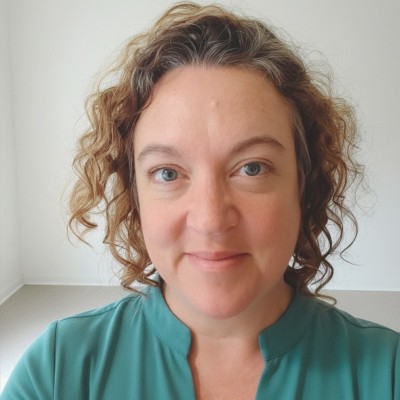
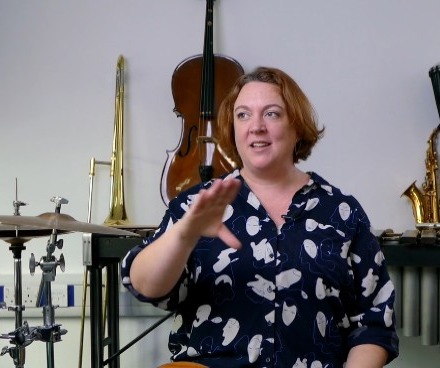
Kate came to education later than most — she began teaching at 30 — and her career shows how readily skills travel between sectors. After a BMus at the University of Glasgow she digitised the entire Scottish Opera music library, benchmarking cataloguing methods, designing the information architecture and building the catalogue in Microsoft Access so that a retiring librarian's knowledge was not lost. She also supported live production on BBC Scotland's Classics for Kids. At Thomas Cook Airlines she was a corporate spokesperson on national television and radio, including BBC Radio 5 Live and Sky News, and led IT-based projects: a secure remote-access website for a global mobile workforce, with press access to photographs, media assets and live releases, and a searchable press database and contacts system designed with the specialist software company Solcara.
She has carried digital transformation into every role since. As a teacher she introduced Moodle at sixth-form level early in the move to virtual learning, building a full year of sequenced online resources. In the local authority service she led, she benchmarked and implemented the SpeedAdmin cloud management information system, introduced online parent payments through ParentPay, moved the organisation's files from legacy VPN storage to SharePoint and Teams, and designed separate user journeys for colleagues, parents and schools — training colleagues throughout, from troubleshooting to GDPR and safeguarding compliance. She still trains people to use Microsoft 365, AI note-takers such as Fathom, and generative and assistive AI tools, and advises organisations on adopting AI safely and positively. Her training has been delivered across education, local authority, cultural and other organisations. That journey led her to design, test and launch her own live suite of reflective apps, built around Relational AI: dialogic, iterative AI that strengthens human reflection, judgement and understanding rather than replacing it.
Her teaching spans Early Years to Sixth Form, in mainstream, SEND and SEMH settings across Greater Manchester and Yorkshire, including Head of Music and course leader roles. She has over a decade of experience mentoring and training PGCE student teachers, and has worked directly with thousands of young people, as well as schools, cultural organisations, partners and communities alike.
For twelve years she was Head of Service in a local authority's Children's Services Education Directorate, leading a Traded Service with responsibility for systems thinking, a £1m–£1.2m budget, and the performance and training of 35–40+ colleagues, alongside regional responsibility for SEND and Rock & Pop across the Greater Manchester Music Hub. She project-managed a £3m+ redevelopment of a specialist music centre from feasibility to occupation, moved the service to high-quality online tuition early in the COVID-19 pandemic, and redesigned the workforce and operating model — evidencing a 34% rise in engagement through before-and-after 360° evaluation. That gives her an intimate understanding of how local government operates.
In 2026 she led a strategic transformation programme for another local authority music service, covering workforce redesign, inclusion, digital systems, commercial strategy and long-term planning. She presented business cases to executive level, secured endorsement and funding for a new operational centre, redesigned pricing after benchmarking, introduced sponsorship and corporate partnerships, and trained the workforce on new digital systems.
Kate is a regular writer for Music Teacher magazine, commissioned across four consecutive years, from practical guides such as Quick tips: working with neurodivergent children to multi-part curriculum resources on listening and score reading from KS3 to KS5, book reviews on SEND and neurodiversity, and a published conversation on what music services and hubs really do. A sought-after speaker and facilitator, she has given keynotes at national and regional conferences on inclusion in education, including the RNCM's 2019 Pathways to Progression conference, has spoken on BBC Radio Manchester about educational innovation, and was accepted to present at the international Hellerau Dalcroze Congress in Dresden in 2026. She was responsible for her service's INSET training programmes and has delivered trauma-informed practice training for Children's Services and Youth Justice colleagues.
She has devised numerous frameworks, policies, strategies and plans — both within her service and working with schools and multi-academy trusts — on inclusive practice, music and the arts, and reflective pedagogy. These include borough-wide curriculum outcomes and teaching sequence frameworks, annual impact reports to an Education Board, and a co-authored Alternative Provision Review (2023) whose recommendations the council adopted. She built progression partnerships with Band on the Wall and the RNCM Pathfinder programme to widen access to conservatoire education for disadvantaged young people.
She chaired the Greater Manchester Music Hub Partnership Board for six years, is a primary school chair of governors, is a trustee for Learning and Participation with Inner City Music Ltd, the charity behind Band on the Wall, and is the founder of the charity Manchester Music Foundation (opens in a new tab), for which she secured £17,500 of Economic Inactivity Trailblazer funding to run the InTo Music Careers Festival.
Kate holds an MEd with Distinction from the RNCM, where her research explored a theory of joy in Dalcroze-inspired early years practice. Her research interests are currently threefold: the use of dialogic interactions with AI to facilitate reflection and positive development; flourishing as evidence that inclusion is working; and Evelyn Sharpe, a forgotten composer. You can read more about The Evelyn Sharpe Project here (opens in a new tab).
She works the way she asks organisations to work: listening first, designing with people rather than for them, and keeping human judgement at the centre of any technology she builds.